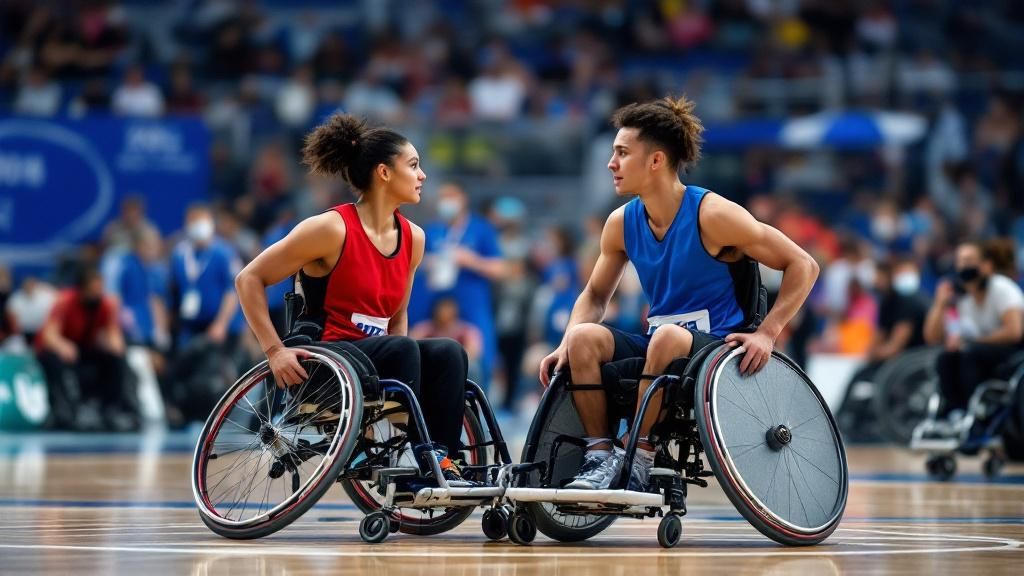

Wheelchair basketball athletes have enthralled audiences worldwide by showcasing exceptional athletic prowess and precision at the prestigious International Championship. These exceptional players have demonstrated that disability poses no obstacle to top-tier athletic achievement, delivering breathtaking performances that rival any professional basketball tournament. From rapid ball control to spectacular slam dunks, participants have shattered stereotypes whilst performing at elite standards. This article investigates the defining performances, outstanding accomplishments, and inspiring narratives that shaped this significant occasion in adaptive sports.
Exceptional Performances Display Elite Talent
The International Championship witnessed an extraordinary display of sporting excellence as wheelchair basketball competitors exhibited the finest standard of ability and resolve. Athletes executed intricate defensive tactics with remarkable precision, whilst their attacking moves displayed impeccable court awareness and technical mastery. The competitive intensity proved that these elite performers compete at a standard equivalent to conventional professional basketball, captivating spectators with their dynamic athleticism, strategic brilliance, and steadfast dedication to success throughout the tournament.
Several standout performances engaged both audiences and commentators, with individual athletes showcasing impressive exhibitions of precise shooting and handling skills. One standout match featured a player executing a series of three-point shots with remarkable consistency, revealing the polished technical capabilities honed through years of committed practice and competitive play. These instances of exceptional performance contributed significantly to the overall spectacle, underlining the range of abilities that wheelchair basketball players display and their ability to perform under demanding conditions at elite level.
The tournament also displayed outstanding team coordination, with coordinated plays and smooth passing patterns showcasing the sophisticated tactical approaches adopted by rival countries. Coaches exhibited impressive tactical creativity, utilising intricate tactical setups and transitional plays that kept audiences thoroughly engaged. The coordination among players, paired with lightning-fast wheelchair manoeuvrability, created a compelling athletic display that went beyond conventional basketball standards and reset benchmarks relating to adaptive athletic performance.
Unprecedented achievements emerged throughout the championship, with multiple competitors surpassing established performance records in points, playmaking, and defensive play. These achievements highlight the continuous evolution of wheelchair basketball as competitors extend the limits of athleticism and skill, establishing fresh benchmarks for excellence. The quest for record-breaking performances inspired athletes to produce sustained high-quality displays, elevating the overall quality of competition and inspiring upcoming players of wheelchair basketball competitors worldwide.
The championship’s achievements ultimately showcased the commitment, perseverance, and exceptional ability of athletes competing in wheelchair basketball who keep pushing forward with disability sports on the world stage. Their achievements transcended competitive success, delivering powerful messages about human capability and capability. By demonstrating elite-level skills and unwavering determination, these remarkable competitors have solidified wheelchair basketball’s position as a top disability sport worthy of global recognition and recognition.
Skilled Execution and Strategic Gameplay
The International Championship featured wheelchair basketball athletes performing sophisticated offensive strategies with remarkable precision. Players displayed exceptional ball control, implementing intricate pick-and-roll formations and quick successive passes that broke down opposing defences. Their positional awareness and court positioning was exceptional, with competitors utilising sophisticated strategic plays to create scoring opportunities. The level of technical proficiency displayed matched top-level conventional basketball, demonstrating the sport’s tactical complexity and rigorous technical demands.
Mastery of Defence and Court Control
Defensive showings throughout the championship exemplified top-tier intensity and strategic skill. Athletes executed aggressive full-court pressing tactics whilst preserving strict positional discipline. Their ability to anticipate opponent plays, alongside swift wheelchair mobility, created imposing defensive structures. Teams displayed complex zone defences and individual-to-individual coverage systems, efficiently containing opposing offences and generating key turnovers in high-pressure situations.
Court command proved to be a key feature of championship-winning teams. Athletes maintained possession through strategic passing patterns and intelligent ball movement patterns. Their grasp of spacing, timing, and floor positioning displayed basketball intelligence comparable to professional competitions. Wheelchair mobility combined with tactical awareness allowed teams to control pace of play, shape the game, and create mental pressure throughout matches.
- Aggressive full-court pressing created instant defensive intensity throughout.
- Quick wheelchair mobility enabled strong transition defence execution.
- Advanced zone defences countered adversary offensive tactics effectively.
- Proactive positioning created crucial turnovers at vital moments.
- Disciplined team defence upheld tactical shape throughout competitions.
Impact on the Game and Future Prospects
The International Championship has profoundly elevated wheelchair basketball’s prominence on the global sporting stage. Media coverage has expanded significantly, drawing investment from large companies and expanded broadcast reach across numerous regions. This greater exposure has encouraged emerging talents to take up wheelchair basketball professionally, bolstering training schemes and community programmes worldwide. Sports authorities now understand the economic and social importance of inclusive athletics, pledging substantial investments in training venues, coaching staff, and athlete services for ongoing expansion.
Looking ahead, the sport encounters remarkable possibilities for growth and development. Technical improvements in wheelchair design keep improving performance capabilities, whilst regulatory changes aim to improve competitive equity and spectator appeal. Worldwide sports organisations are creating more defined routes for athletes transitioning from grassroots to elite competition. Furthermore, greater Paralympic exposure promises greater mainstream acceptance and commercial partnerships. These developments suggest wheelchair basketball will keep thriving, ultimately changing views of disability in sport and motivating people worldwide.
